

Nội dung
ToggleDoing your own nails at home is more popular than ever — it’s relaxing, rewarding, and helps you save money between salon visits. But while many people focus on polish, shape, or style, one crucial part of the process often gets overlooked: tool hygiene.
Your nail tools — clippers, buffers, files, pushers, and brushes — come in direct contact with your skin and nails every time you use them. Without regular cleaning, they can easily become a breeding ground for bacteria, fungi, and viruses.
So if you’ve ever experienced breakouts around your nails, redness, or even unexpected nail breakage, it might not be the polish — it could be your tools.
Learning how to sanitize nail tools at home doesn’t require professional equipment. It only takes a few minutes and basic supplies you probably already own.
At Meski Nail, we’re passionate about safe, beautiful nail care — because hygiene is just as important as color or design. Let’s walk through everything you need to know to keep your tools clean, safe, and salon-ready — right from home.
1. Why Sanitizing Your Nail Tools Matters More Than You Think
It’s easy to underestimate how much contact your tools make with your skin. Every time you clip, file, or push back cuticles, microscopic debris builds up — skin cells, product residue, and moisture. Together, these create the perfect environment for germs to thrive.
Failing to sanitize your tools properly can cause:
Bacterial infections (redness, swelling, or pain around the nails)
Fungal infections (thick, discolored nails or itching)
Cross-contamination (transferring bacteria between your hands and feet)
Premature product breakdown (old oils and residues affecting polish adhesion)
Even if your tools look clean, unseen microbes may still be there — waiting to grow.
When you sanitize your tools properly, you’re not just protecting your nails; you’re preserving your entire nail routine. Clean tools perform better, last longer, and keep your hands healthier.
2. Cleaning vs. Sanitizing vs. Sterilizing: What’s the Difference?
These three terms are often used interchangeably — but they mean very different things:
|
Process |
What It Does |
When to Use It |
|---|---|---|
|
Cleaning |
Removes dirt, dust, oil, and visible residue |
Every time after use |
|
Sanitizing |
Kills most bacteria and germs |
After cleaning |
|
Sterilizing |
Destroys all microorganisms (bacteria, fungi, spores, viruses) |
Used in professional salons or medical settings |
At home, cleaning and sanitizing your nail tools is more than enough to maintain a safe, hygienic routine.
3. Supplies You’ll Need to Sanitize Nail Tools at Home
You don’t need a salon autoclave — just a few household items:
Antibacterial soap or mild dish detergent
Warm water
70% isopropyl alcohol (or higher)
Cotton pads or clean towels
Small cleaning brush or toothbrush
Spray disinfectant (optional)
A clean, dry container or zip pouch for storage
For eco-friendly beauty lovers, you can even use reusable cloths and natural disinfectant sprays made with tea tree oil or vinegar.
4. Step-by-Step Guide: How to Sanitize Nail Tools at Home
Follow these steps like a pro technician — it’s easy, effective, and takes less than 15 minutes.
Step 1: Clean Your Tools First
Start by removing visible dirt, dust, or leftover polish particles.
Use warm water and a few drops of soap.
Scrub tools gently with a toothbrush or nail brush.
Focus on hinges, corners, and edges where buildup happens.
Rinse thoroughly and pat dry with a clean towel.
💡 Pro tip: Never skip this step — sanitizing without cleaning first won’t remove physical debris, which can block disinfectants from working properly.
Step 2: Disinfect Metal Tools
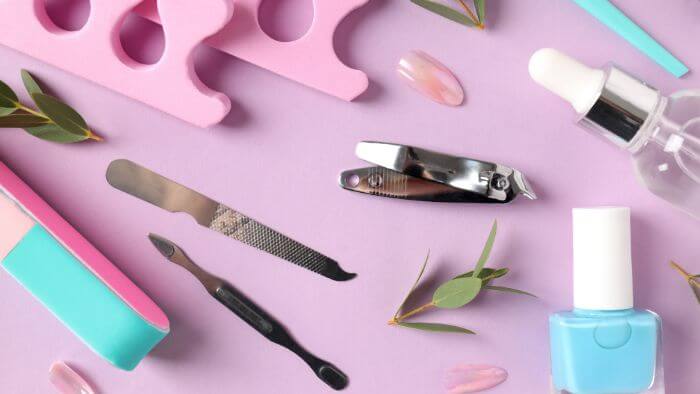
Clippers, nippers, and cuticle pushers are all metal — and these can be fully disinfected.
Fill a small bowl with 70% isopropyl alcohol.
Submerge tools for 10 to 15 minutes.
Remove and allow them to air dry on a clean paper towel.
Alternatively, spray with a disinfectant and wipe down with a lint-free cloth.
If you use your tools often (like every few days), sanitize them after every session.
Step 3: Sanitize Non-Metal Tools
Items like nail files, buffers, and wooden sticks can’t be soaked in liquid because they absorb moisture and lose shape.
Here’s how to handle them safely:
Nail files: Replace after 3–4 uses, or wipe with disinfectant wipes between uses.
Buffers: Spray lightly with alcohol and let air dry.
Orangewood sticks: Always single-use — never reuse them.
Nail brushes: Wash with warm, soapy water and spray with alcohol.
🧴 Pro tip: Keep a few spare files and buffers ready — they’re affordable and much safer when rotated regularly.
Step 4: Let Everything Dry Completely
Air drying is crucial. Moisture encourages bacteria to grow back quickly.
Lay tools flat on a clean, dry towel until they’re fully dry before storing them.
Step 5: Store Properly
Once sanitized and dry, place your tools in a sealed container or zip pouch.
Avoid humid bathrooms or damp drawers.
If you have a dedicated nail kit box, clean it monthly with a disinfectant wipe.
Clean storage keeps your hard work intact — your tools stay sanitized until the next use.
5. How Often Should You Sanitize Nail Tools at Home?
It depends on how often you use them:
|
Usage Level |
Sanitizing Frequency |
|---|---|
|
Once a week or less |
After every use |
|
2–3 times per week |
After each session + deep clean weekly |
|
Daily |
After each session + deep sanitize every 3 days |
If you share tools (with family or roommates), always sanitize both before and after each person’s use.
6. How to Know When to Replace Your Nail Tools
Even well-sanitized tools eventually wear out. Knowing when to replace them keeps your nails safe:
Clippers or nippers: Replace every 6–12 months, or when dull.
Metal pushers: Every 1–2 years if cared for properly.
Files: Every 3–4 uses.
Buffers: Monthly, or when they lose grit.
Brushes: Every 3 months or when product builds up.
Keeping track of replacements ensures your tools are performing at their best — clean, sharp, and safe.
7. Common Mistakes to Avoid When Sanitizing Nail Tools
Even if you clean regularly, a few common habits can undo your hard work:
🚫 Skipping drying time — leads to rust or bacteria growth.
🚫 Mixing clean and dirty tools in the same container.
🚫 Leaving alcohol open — it evaporates quickly and becomes less effective.
🚫 Using bleach on metal tools — it corrodes surfaces and shortens tool life.
Stick to gentle, proven methods — your tools (and nails) will thank you.
8. When Sharing Isn’t Caring
It might seem harmless to lend your nail file to a friend — but this is one of the quickest ways to spread nail infections.
Why? Because microscopic traces of skin, oil, or even blood can transfer from one person’s tools to another. Fungal spores and bacteria can survive for days on metal or emery surfaces.
💡 Tip: Keep your tools personal, just like your toothbrush. If you’re doing a group nail day, prepare separate disposable tools for everyone — they’re inexpensive and worth the protection.
9. A Cleaner Nail Routine = Healthier Nails
Proper sanitation helps nails grow stronger, look smoother, and resist common problems like peeling or brittleness.
Combine clean tools with a healthy nail routine:
Wash hands before every manicure.
Soak nails in warm, soapy water for a few minutes.
Gently push back cuticles — avoid cutting.
File in one direction to prevent breakage.
Apply a nourishing cuticle oil or hand cream.
Finish with Meski’s Crystal Top Coat or Matte Top Coat for that professional shine.
You’ll not only prevent infections but also improve nail texture and color over time.
10. Choosing Safe, Quality Nail Tools
Quality makes a big difference in how easily you can clean and sanitize your tools. Look for:
Stainless steel construction – resistant to rust.
Replaceable parts – like buffer pads or file heads.
Smooth joints and edges – easy to clean.
Protective cases – to prevent contamination.
Meski Nail’s curated nail care collection focuses on safety, performance, and durability — perfect for anyone who wants salon-quality results at home.
Trusted brands like Tweezerman, OPI, and Victorinox also design their tools for easy sanitation and longevity.
11. Nail Tool Storage Ideas That Keep Things Clean
Once you’ve sanitized your tools, where you store them matters just as much:
Use a labeled organizer box to separate clean vs. used tools.
Keep a silica gel pack inside to reduce humidity.
Store in a cool, dry drawer away from sunlight.
Clean the container itself monthly with alcohol or wipes.
You can even use a UV sterilizing box (available online) for an extra layer of protection — it’s a small one-time investment for lifelong safety.
12. Signs Your Nail Tools May Be Contaminated
If you’ve experienced:
Sudden redness or irritation after a manicure,
A foul smell or discoloration on tools, or
White spots forming on nails —
then it’s time for a deep clean and possibly a replacement.
A clean nail kit never smells, stains, or feels sticky — those are warning signs that bacteria might already be living there.
13. Hygiene and Confidence Go Hand in Hand
Clean tools don’t just protect your nails — they boost your confidence. When you know your setup is spotless, your at-home manicure becomes a self-care ritual, not a health risk.
And here’s the best part: it’s fast, simple, and affordable. Once you get into the habit, sanitizing your nail tools feels as natural as washing your hands.
14. Meski Nail’s Commitment to Safer Beauty
At Meski Nail, we’re committed to helping you care for your nails safely — from our buffers and files to our eco-friendly disposable spa liners and durable gloves. Every product we recommend supports your hygiene and beauty routine.
Clean tools are the foundation of great nails — and it’s never too late to start fresh.
Remember: sanitize, store, replace, repeat. That’s the Meski way.
Final Thoughts
A perfect manicure isn’t just about steady hands or stylish polish — it starts with clean, sanitized tools.
By taking a few minutes to sanitize nail tools at home, you can prevent infections, extend your tool’s lifespan, and enjoy flawless nails every time.
Beautiful nails begin with healthy habits — and safety will always be in style.


