

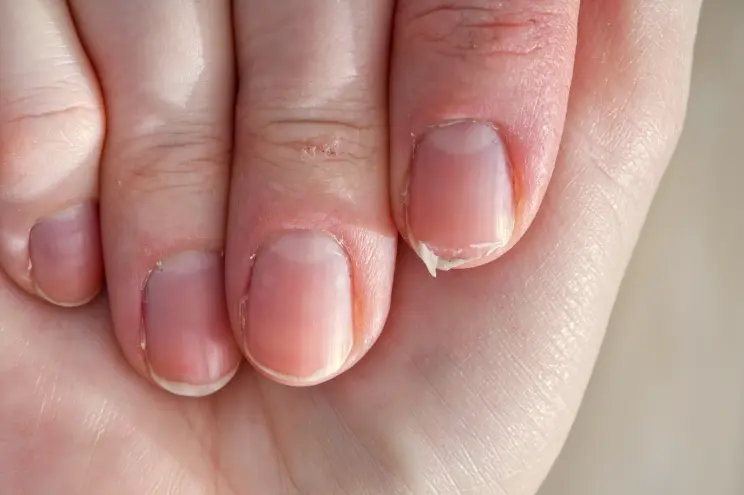
When Nails Feel Worse After You “Did Everything Right”
You finally did what everyone told you to do.
You stopped wearing polish.
You removed gel.
You avoided acrylics.
You gave your nails a “break.”
And then… your nails felt:
-
weaker
-
bendier
-
more brittle
-
more sensitive
-
easier to peel or split
That moment often triggers confusion:
“I rested my nails — why are they worse?”
“Aren’t nails supposed to breathe?”
“Did I damage them permanently?”
Here’s the truth that rarely gets explained clearly:
Nails do not breathe.
And most nail weakness after a “rest” is not damage — it’s exposure.
This article breaks down the myth of letting nails breathe, explains what actually happens when nails are bare, and shows how to rest your nails without making them weaker.
1. Where the “Nails Need to Breathe” Myth Comes From
The idea sounds logical, so it spread easily.
Skin breathes.
Hair needs oxygen.
So… nails must need air too, right?
But biologically, nails are very different.
Nails are made of keratin — not living tissue
-
No lungs
-
No oxygen exchange
-
No respiration
-
No “breathing” function
The nail plate is dead keratin, similar to hair — but denser and layered.
So when people say “let your nails breathe,” what they really mean is:
-
stop covering them
-
stop filing them
-
stop removing product
-
stop stressing them
The intention is rest.
The explanation is wrong.
2. What Actually Happens When Nails Are Bare
When you remove polish or gel and leave nails uncovered, several changes happen immediately.
Some are good.
Some are not.
What improves:
-
chemical exposure stops
-
no more acetone for a while
-
no more removal friction
-
no more curing heat
What gets worse:
-
moisture loss increases
-
surface protection disappears
-
keratin layers are exposed
-
friction increases
-
bending happens more easily
So while nails are no longer stressed chemically, they are now stressed mechanically and environmentally.
This is why nails often feel weaker after a “rest.”
3. Why Nails Feel Softer or Bend More Without Polish
Many people mistake softness for weakness.
But here’s what’s happening:
When polish or base coat is on the nail, it acts like:
-
a thin armor
-
a stabilizing layer
-
a moisture barrier
-
a surface smoother
When it’s removed:
-
water enters the nail more easily
-
water leaves the nail more easily
-
keratin swells and shrinks repeatedly
This constant expansion and contraction makes nails feel:
-
softer
-
more flexible
-
less “held together”
That doesn’t mean the nail is damaged — it means it’s unprotected.
4. Why Nails Peel More During “Rest Periods”
Peeling is one of the most common complaints after stopping polish.
This happens because:
-
keratin layers naturally stack like pages of a book
-
water breaks the bonds between those layers
-
repeated wet–dry cycles loosen the layers
Without a protective coating:
-
layers separate more easily
-
free edges peel
-
corners split
So paradoxically, bare nails often peel more than protected nails.
5. The Difference Between Nail Damage and Nail Exposure
This distinction is critical.
Nail damage means:
-
keratin layers are broken
-
nail plate is thinned
-
structural integrity is lost
-
recovery takes weeks or months
Nail exposure means:
-
nail is intact
-
nail is just unshielded
-
weakness is temporary
-
protection restores strength quickly
Most post-rest weakness is exposure, not damage.
That’s good news — because exposure is easy to fix.
6. Why Nails Feel More Sensitive When Bare
Another common complaint is sensitivity:
-
tapping feels uncomfortable
-
pressure feels stronger
-
nails feel “tight” or sore
This happens because:
-
thinner keratin layers transmit pressure faster
-
no coating absorbs impact
-
nail bends more, pulling on the nail bed
Sensitivity does not mean nails are unhealthy.
It means they’ve lost their buffer layer.
7. When a Nail “Rest” Is Actually Helpful
Rest can be beneficial — but only in specific situations.
A rest period helps when:
-
nails were over-filed
-
nails were over-buffed
-
nails were chemically dehydrated
-
nail plate was thinned
-
cuticles were irritated
In these cases, rest should focus on:
-
recovery
-
hydration
-
gentle reinforcement
Not total exposure.
8. Why Bare Nails Are Not the Same as Rested Nails
This is where most advice goes wrong.
Bare ≠ rested.
True nail rest means:
-
no harsh removal
-
no aggressive prep
-
no thinning
-
no constant soaking
-
continued protection
Leaving nails naked without support is not rest — it’s stress in a different form.
9. The Right Way to “Rest” Your Nails (Meski Approach)
If you want your nails to recover without becoming weak, the goal is low-impact protection, not total exposure.
Step 1: Keep a Protective Base Layer
A strengthening base or foundation layer:
-
stabilizes keratin
-
reduces bending
-
limits water absorption
-
prevents peeling
This allows nails to recover while still being protected.
Step 2: Hydrate Daily — Consistently
Oil is not optional during rest periods.
Daily oil:
-
restores flexibility
-
strengthens keratin bonds
-
reduces splitting
-
improves surface smoothness
Consistency matters more than quantity.
Step 3: Avoid Over-Buffing “For Shine”
Buffing removes the nail’s natural seal.
Instead:
-
smooth lightly only when needed
-
preserve surface layers
-
avoid chasing shine mechanically
Natural shine comes from healthy keratin, not abrasion.
Step 4: Protect From Water Extremes
Repeated soaking and drying is worse than polish.
-
wear gloves for cleaning
-
limit prolonged water exposure
-
dry hands thoroughly
Water is one of the biggest causes of nail weakness.
Step 5: Keep Length Conservative
During recovery:
-
shorter nails = less leverage
-
less bending
-
less peeling
Length can increase again once strength stabilizes.
10. How Long Nails Actually Need to Recover
Recovery timelines depend on what the nail experienced before.
-
mild dehydration: 1–2 weeks
-
peeling layers: 2–4 weeks
-
thinning: 6–12 weeks
-
severe damage: full regrowth cycle
Protection during recovery shortens these timelines significantly.
11. Signs Your Nails Are Recovering (Not Failing)
Good signs during a rest period:
-
less peeling over time
-
improved flexibility
-
smoother surface
-
less sensitivity
-
stronger free edge
Bad signs that need adjustment:
-
increasing splits
-
worsening sensitivity
-
constant peeling
-
pain or discoloration
These indicate too much exposure, not too much protection.
12. The Psychological Side of Nail “Rest”
Many people expect nails to look better immediately after stopping polish.
When that doesn’t happen, frustration sets in.
Remember:
-
polish often masked surface issues
-
bare nails reveal reality
-
recovery is gradual
Bare nails are honest nails — not bad nails.
Conclusion: Nails Don’t Need to Breathe — They Need Balance
Nails don’t weaken because they can’t breathe.
They weaken because:
-
they lose protection
-
they absorb too much water
-
they bend too freely
-
their keratin layers separate
A healthy nail “rest” is not about exposure.
It’s about reducing stress while maintaining support.
At Meski, we believe nail health comes from balance:
-
protection without overload
-
recovery without neglect
-
strength without rigidity
When you rest your nails the right way, they don’t come back weaker.
They come back stronger.


